 Kewal Kapoor
केवल कपूर दिल से
New Delhi
Kewal Kapoor
केवल कपूर दिल से
New Delhi
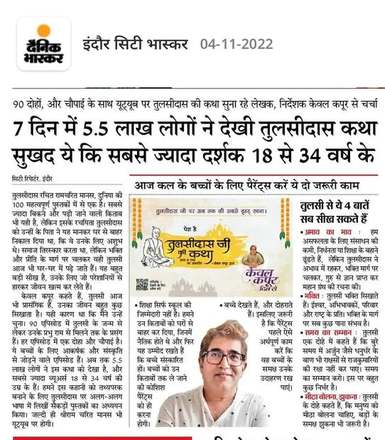
A poet from 1532. 5.5 lakh viewers in seven days. 69% of them under thirty-four.
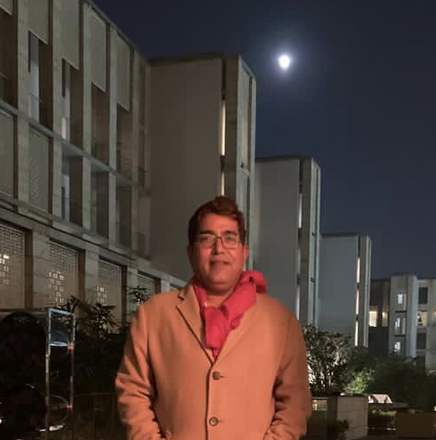
That is the job, and it has been the job for thirty years: take what India already owns and make it land on the people least likely to go looking for it. Gandhi. Kashmir. Tulsidas. Tax law. Old age. Reading, writing, directing, branding — and now AI. सबसे पुरानी सामग्री, सबसे नई पीढ़ी।
- Ministry of External Affairs
- Ministry of Labour & Employment
- Incredible India
- Doordarshan
- NFDC
- GAIL
- Fever 104
- Chai Kreative
Delhi · Mumbai · Indore — working in Lucknow, Patna & Ranchi
Thirty years, and nothing on this list replaced what came before it. Each was added to the last, which is why the work keeps arriving from an unexpected direction.
“A polyglot.” — Dinis Guarda, in interview
A letter, a borrowed camera, and a valley nobody wanted to sell.
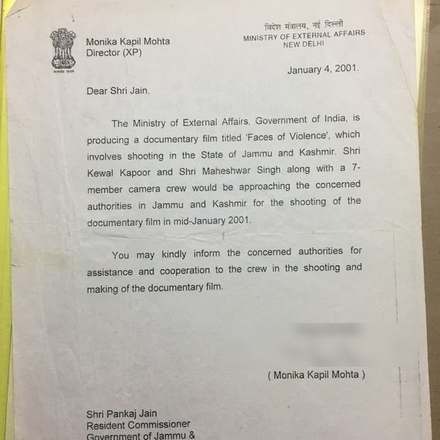
On 4 January 2001 the Ministry of External Affairs asked the authorities in Jammu and Kashmir to let a seven-member crew through. What came back was twenty-six minutes of unscripted Kashmir. At the India Habitat Centre it played to complete silence. In the same stretch he was researching custodial deaths for a project called Haqeeqat.
Nobody had commissioned an opinion. He filed one anyway. Twenty-five years later that is still the method.
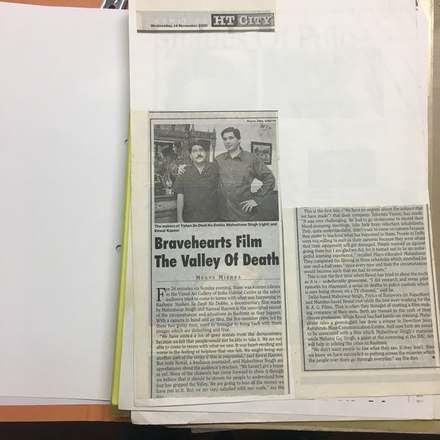
The second person ever allowed to film inside 30 January Marg. The first was Richard Attenborough.
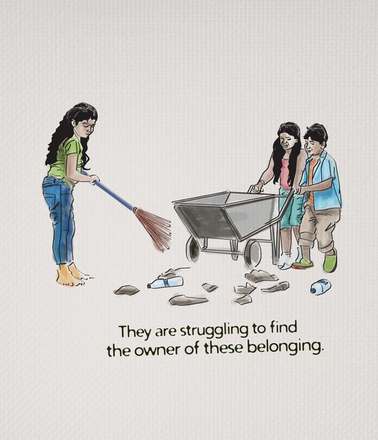
He conceived, wrote and ran Search for Gandhi for an NGO — India’s first multimedia Gandhi campaign taken to every school in Delhi. No slogan. A set of belongings, and a question: they are struggling to find the owner of these. Would you like to join them?
Then he took a crew into the lane where Gandhi was killed and shot an entire short film there — permission granted once before, to the man who made Gandhi.

A habit of arriving before the category exists.
Two of these, in unrelated fields, neither commissioned as innovation. He simply went first.
कर से शिखर
The country’s first researched, written and presented television series on tax law. He conceived it, built the research, wrote it and hosted it — thirteen parts on DD. Nobody had made tax watchable before, and few have tried since.
India’s first sports portal
A key role in building it, in the years when “portal” was still a word that needed explaining.
Two national campaigns he worked on from behind, on agency teams that held the account.
The mandate sat with the agency and the credit belongs to it. His contribution was made from inside that team — which is the ordinary and unglamorous way most national work actually gets made, and worth stating plainly rather than dressing up.
Incredible India
Part of the agency team on the account, across the two years the campaign ran.
The Army campaign
The same arrangement, on the same basis — inside the team that held the work.
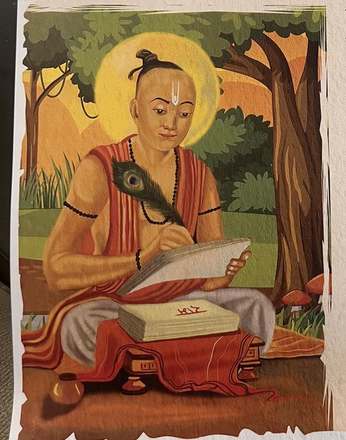
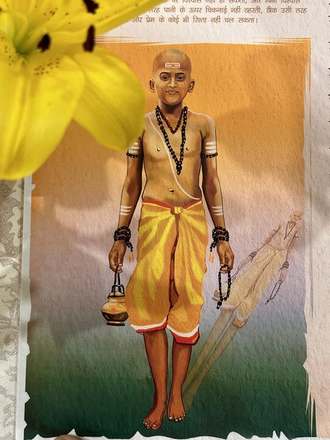
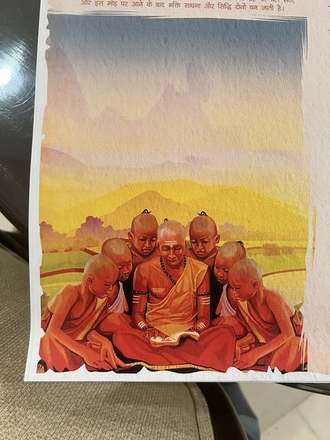
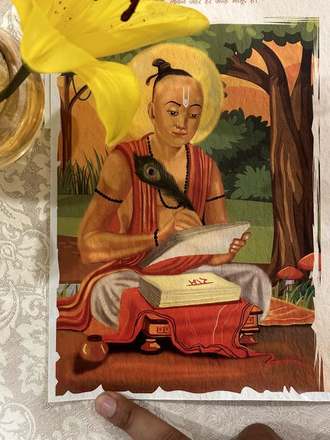
India’s first transmedia katha, and the audience nobody predicted.
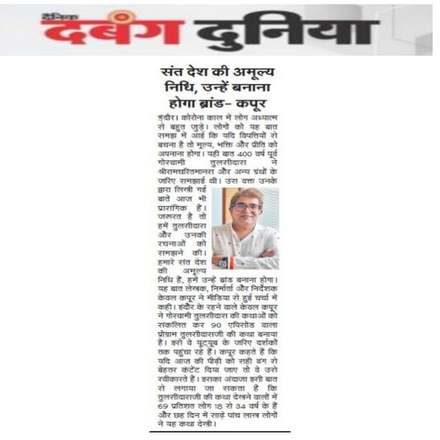
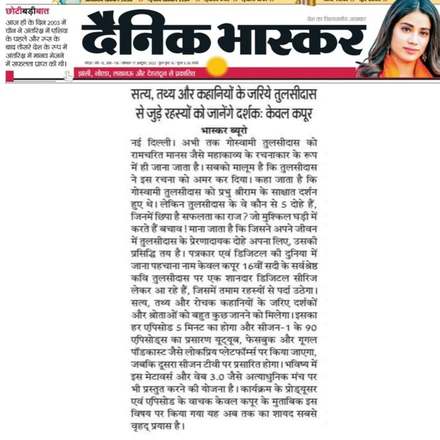
Eight episodes exist so far, of ninety planned. Five minutes each, one doha in every one. Those eight were enough to move a sixteenth-century poet into a feed built for six-second attention — and the papers led not with how many watched, but with how young they were.
“Our saints are this country’s priceless treasure. We will have to make them a brand.”
Kewal Kapoor · दबंग दुनिया- —The remaining episodes of the ninety.
- —An NFT release built on the series artwork.
- —A one-hour multimedia theatrical production.
Partnership and collaboration enquiries are welcome, through the office.
The most exhaustive account of the Ram Janmabhoomi struggle ever assembled — and the job of making people want to open it.
Two volumes. Twelve hundred and forty-four pages. Decades of record, testimony and illustration in one work. Scholarship on that scale usually reaches a hundred people. Branding and strategy were his brief: give it a shape, a voice and a route to the reader it was actually written for.
The one prejudice nobody bothers to defend, and nobody stops doing.
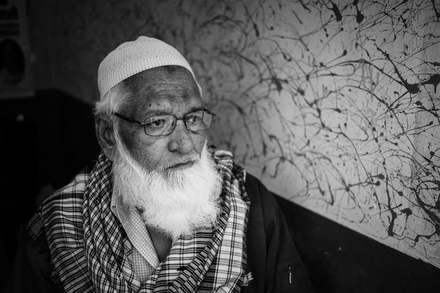
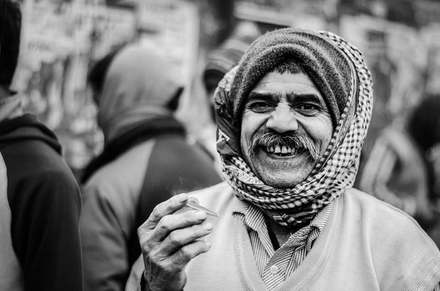
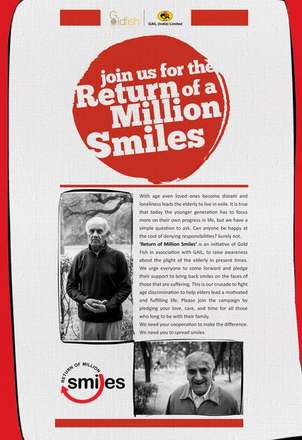
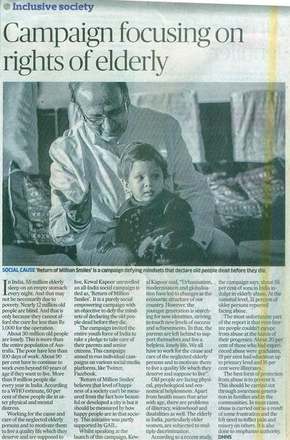
Before he made anything about ageing, he studied it for years. In 2015 he founded Return of a Million Smiles — self-funded, deliberately outside the NGO structure, and built on a refusal: that an old-age home is not the default answer. It became the largest ageing campaign India’s non-NGO space had seen, ran with partners including GAIL, and won a CSR Award.
He was appointed exclusive implementation partner to the Ministry of Labour and Employment, and played a central part in shaping the Second Life thinking that reached policy — the argument that sixty is a beginning and not an exit, and that a country ageing this fast cannot afford to file its elders away.
Fifty-five million elderly Indians sleeping hungry. Twelve million blind, often over a thousand rupees they did not have. He still writes the columns nobody commissions, because advertising keeps selling a country with no old people in it.
“A society’s happiness can’t be measured by how beautiful its city is. It should be measured by how happy its old people are.”
Kewal Kapoor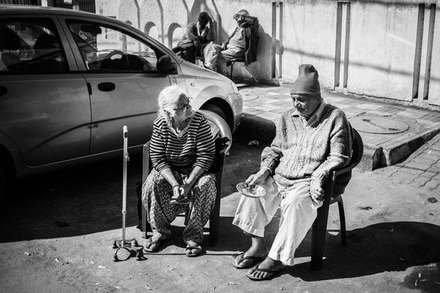
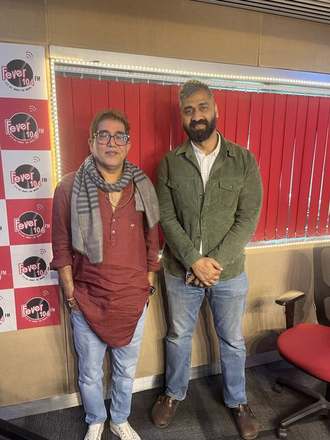
Twenty-plus short films. One radio station. A state most campaigns were too nervous to sell.
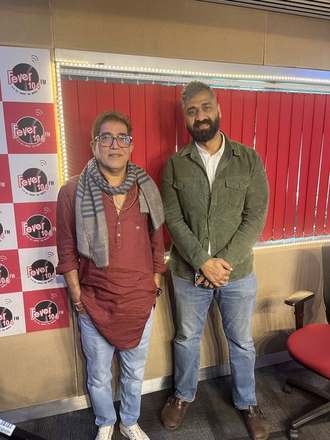
On Fever 104, the one medium where you cannot hide behind a picture — no image to carry a weak line, no edit to save a bad idea.
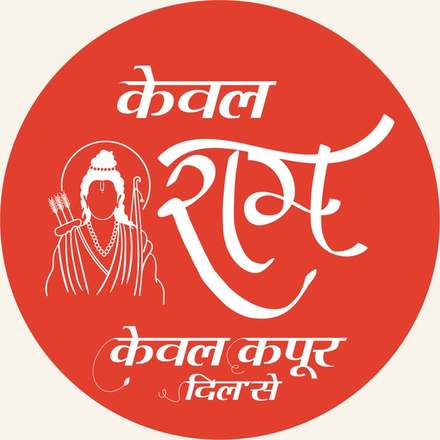
And the केवल राम mark: Ram in a single unbroken line, the face left open, the tail of the म holding the whole thing up. The same line runs down the left of this page.
Five years off. Then back, with the research finished and a different question.
He stopped in 2020 and spent the time reading. He came back in 2025 to work almost entirely in concept, research and idea — this time with AI and content in the same hand. Three intelligence layers are at final stage: one for eyes, one for energy, one for what a city puts on its walls.
Ideas, concepts, campaigns
A concept overnight. A campaign in a day. A speech in an hour. Thirty years in, still the part he likes most.
Events and cultural properties
Festivals built from the ground, not booked from a catalogue.
Large transformation programmes
State-scale work with governments and PSUs — health, education, energy, culture. Measured in districts, not impressions.
Advisory
A core practice, not a sideline. Governments, PSUs, boards and founders — usually brought in at the point where the problem has not yet been written down.
A swadeshi intelligence layer
An Indian AI layer, in Indian languages, on Indian terms. India never lacked intelligence. It lacked its own.
Spiritual companionship
Old texts read alongside people in later life — companionship rather than instruction, and the one part of the practice he has never charged an agency rate for.
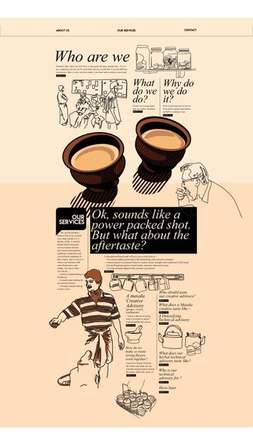
Two things India already owns and treats as a season rather than an asset.
He has been circling both for years. Neither is a revival project, and neither needs inventing — the material is already there, in working order, every year.
The festival ecosystem
Ramlila, Dussehra and the Diwali mela taken seriously as national cultural assets — properties with a form, a calendar and a route to the world — rather than as an annual arrangement of lights. A country that imports everyone else’s calendar and exports none of its own.
Shayari, qawwali and mushaira — in every city
Not a heritage revival and not a festival once a year. A working circuit: a mehfil in every city, on a schedule, with an audience that turns up because it is on this week — not because it is disappearing.
Both are old. Both are full of stories nobody is counting.
Neither is built. Both are open to partnership, patronage and collaboration — through the office.
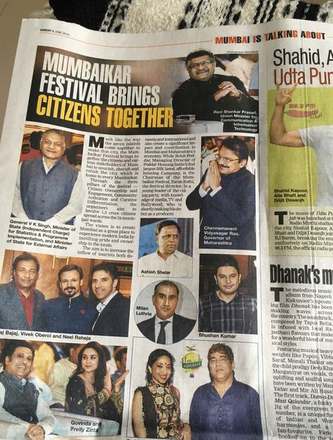
Where it has been written about
Press · columns · interviewsFull press index available on request
The rest of it
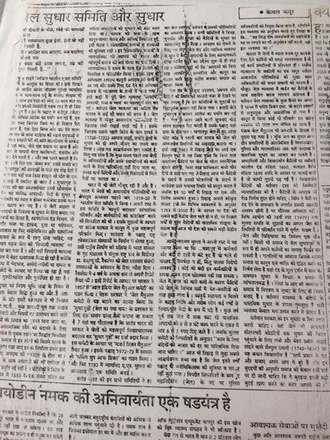
Columns · clippings · identities · plates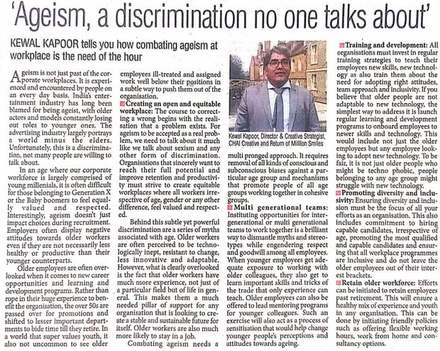
One hour.
Nothing to sell.
Most people are afraid of being judged. You’re welcome to judge him. There’s nothing to book, nothing to buy, and no brief required.
Watch one of the eight
Five minutes, one doha. Start with Episode 1 — 5.27 lakh views. If it doesn’t move you, stop here, no hard feelings.
Send the thing that hasn’t found its shape yet
Two paragraphs is plenty. All correspondence is handled by the office — write to Khushi Kumari, Senior Coordinator, at misskhushi.kumari@chaikreative.ai
Take the hour
New Delhi, in person, arranged through the office. Bring the problem, not the brief.
Age counts years.Kewal Kapoor
Your soul counts stories.
A note on this record
Much of the work shown here was made in partnership, in collaboration, or under other forms of professional relationship. Nothing on this page is a claim of title, ownership or sole authorship over any campaign, publication, institution, ministry, department or organisation named. Where an institution appears, it appears as the context in which work was done — not as an endorsement, an affiliation, or a representation of any current relationship.
This page is a factual record and nothing more. It is not an offer, a proposal, a representation, or a basis for any business, commercial, hiring or engagement decision. Please satisfy yourself independently before acting on anything here — ask questions, ask for references, and verify.
All correspondence is handled by the office. Kewal Kapoor is not reachable at a personal address through this page. Write to Khushi Kumari, Senior Coordinator, at misskhushi.kumari@chaikreative.ai.